


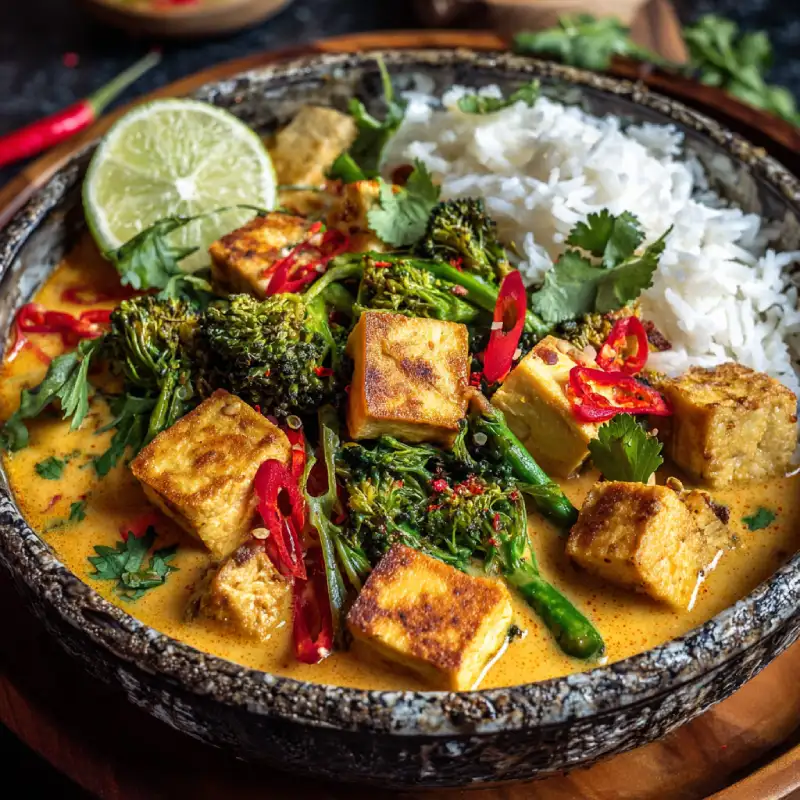
Introduction: Why This Tofu Thai Curry Will Be Your New Go-To
Welcome, fellow food lovers! Today, we’re diving deep into the vibrant, aromatic world of Thai cuisine with a recipe that I’ve poured my heart into perfecting: the ultimate tofu Thai curry. Imagine tender yet satisfyingly crispy tofu, enveloped in a rich, creamy coconut sauce, bursting with fragrant ginger, garlic, and just the right amount of spice. Every spoonful is a symphony of flavors – a harmonious balance of sweet, salty, sour, and umami, with a gentle warmth that lingers. This isn’t just another curry recipe; it’s a culinary journey that transforms simple ingredients into an extraordinary meal, proving that plant-based dishes can be incredibly indulgent and deeply flavorful. See more good recipes here.
My personal journey to creating this perfect tofu Thai curry involved countless experiments, adjustments, and taste tests, driven by a desire to capture the authentic essence of Thai flavors while keeping it accessible for home cooks. What makes this recipe truly stand out is its ability to deliver complex restaurant-quality taste with surprisingly straightforward steps, making it an instant go-to for busy weeknights or impressive dinner parties.
How This Recipe Works: Flavor and Texture unlocked
This tofu Thai curry achieves its phenomenal taste and texture through strategic layering of ingredients and techniques. It’s designed to maximize flavor development at every stage, ensuring a deeply satisfying experience.
- Crispy Tofu, Creamy Sauce: We start by pressing and pan-frying the tofu to golden perfection, creating a delightful contrast to the silky, rich coconut milk-based sauce.
- Aromatic Depth from Fresh Ingredients: The foundation of our curry relies heavily on freshly grated ginger, minced garlic, and finely diced shallots, which are bloomed in oil to release their potent aromas and build a complex flavor base.
- Balanced Heat and Sweetness: Through careful selection of curry paste and the addition of a touch of brown sugar, we achieve that classic Thai harmony of spicy, savory, and subtly sweet, without overwhelming the palate.
- Quick and Flavorful Vegetable Inclusion: Vegetables are added at just the right time to retain their vibrant color and slightly crisp texture, adding freshness and nutritional value to the rich curry.
Ingredients and Smart Substitutions: Building Your Flavor Base
Here is what you need and why:
Extra-Firm or Super-Firm Tofu: This is non-negotiable for achieving that coveted crispy exterior. Its dense texture holds up beautifully in the curry without crumbling. Always press your tofu to remove excess water. For a quicker alternative, you can find pre-pressed or vacuum-sealed super-firm tofu in many grocery stores now.
Thai Curry Paste (Red or Green): The heart of our tofu Thai curry! Red curry paste typically offers a balance of heat and aromatic spices, while green curry paste tends to be spicier. Choose based on your preference. For an authentic brand, check out Serious Eats’ guide to curry pastes.
Full-Fat Coconut Milk: Absolutely essential for a rich, luxurious, and creamy sauce. Do not skimp on this! Light coconut milk will result in a thinner, less satisfying curry.
Fresh Aromatics (Ginger, Garlic, Shallots): These are the backbone of the curry’s complex aroma. Do not use dried or powdered substitutes if you want truly vibrant flavor.
Vegetables (Bell Peppers, Snap Peas, Spinach): These add color, texture, and essential nutrients. Feel free to customize with other quick-cooking vegetables like broccoli florets, baby corn, or bamboo shoots.
Fish Sauce (or Tamari for Vegan): This provides crucial umami and savory depth. For a vegan tofu Thai curry, use tamari or a vegan fish sauce alternative.
Lime Juice: Fresh lime juice is non-negotiable! It brightens the entire dish, cutting through the richness of the coconut milk.
Brown Sugar: A touch of brown sugar balances the heat and acidity, harmonizing all the flavors. You can substitute with palm sugar for a more authentic Thai profile.
Cooking Oil: A neutral oil like avocado, grapeseed, or coconut oil is perfect for sautéing without imparting unwanted flavors.
Step-by-Step Instructions: Your Visual Walkthrough to Deliciousness
1. Press and Crisp Your Tofu
Drain your extra-firm tofu and press it for at least 30 minutes. Cut into 1-inch cubes. Heat 2 tablespoons of oil in a large skillet. Add the tofu in a single layer and cook for 5-7 minutes per side until golden brown and crispy. Set aside.
2. Sauté Aromatics and Curry Paste
In the same skillet, add another tablespoon of oil if needed. Add minced shallots and cook for 2-3 minutes. Stir in garlic and ginger for another minute. Add your chosen curry paste and cook for 1-2 minutes, stirring constantly to ‘bloom’ the paste.
3. Build the Sauce
Pour in the full-fat coconut milk. Stir well to combine. Bring the mixture to a gentle simmer. Add the fish sauce (or tamari), brown sugar, and half of the fresh lime juice. Stir and taste to ensure a good balance.
4. Add Vegetables and Tofu
Add bell peppers and snap peas. Cook for 3-5 minutes until tender-crisp. Return the crispy tofu cubes to the pan, stirring to coat. Finally, stir in the fresh spinach, allowing it to wilt for just a minute or two.
5. Simmer to Perfection
Simmer for another 2-3 minutes. Adjust with more fish sauce for saltiness, brown sugar for sweetness, or lime juice for brightness if needed. Serve immediately.
Expert Tips for Success: Elevate Your Curry
- Don’t Skip Pressing the Tofu: Important for achieving crispy tofu that holds its shape.
- Bloom Your Curry Paste: Sautéing the paste in oil before adding coconut milk intensifies its flavor.
- Taste and Adjust: Thai cooking is all about balance. Continually taste and adjust seasoning.
- Don’t Overcook Vegetables: Add them towards the end to ensure they remain tender-crisp.
What to Serve With Your Tofu Thai Curry
- Jasmine Rice: The classic fragrant choice!
- Brown Rice or Quinoa: For a healthier, nuttier alternative.
- Cauliflower Rice: An excellent low-carb option.
- Fresh Herbs: A generous sprinkle of cilantro or Thai basil leaves.
Storing and Reheating Your Tofu Thai Curry
- Refrigeration: Cool to room temperature and store in an airtight container for up to 3-4 days.
- Freezing: Freeze for up to 2-3 months. Thaw overnight in the refrigerator before reheating.
- Reheating: Best reheated gently on the stovetop over medium-low heat. Add a splash of water if too thick.